AI Explained
Are LLMs the Only Type of AI?
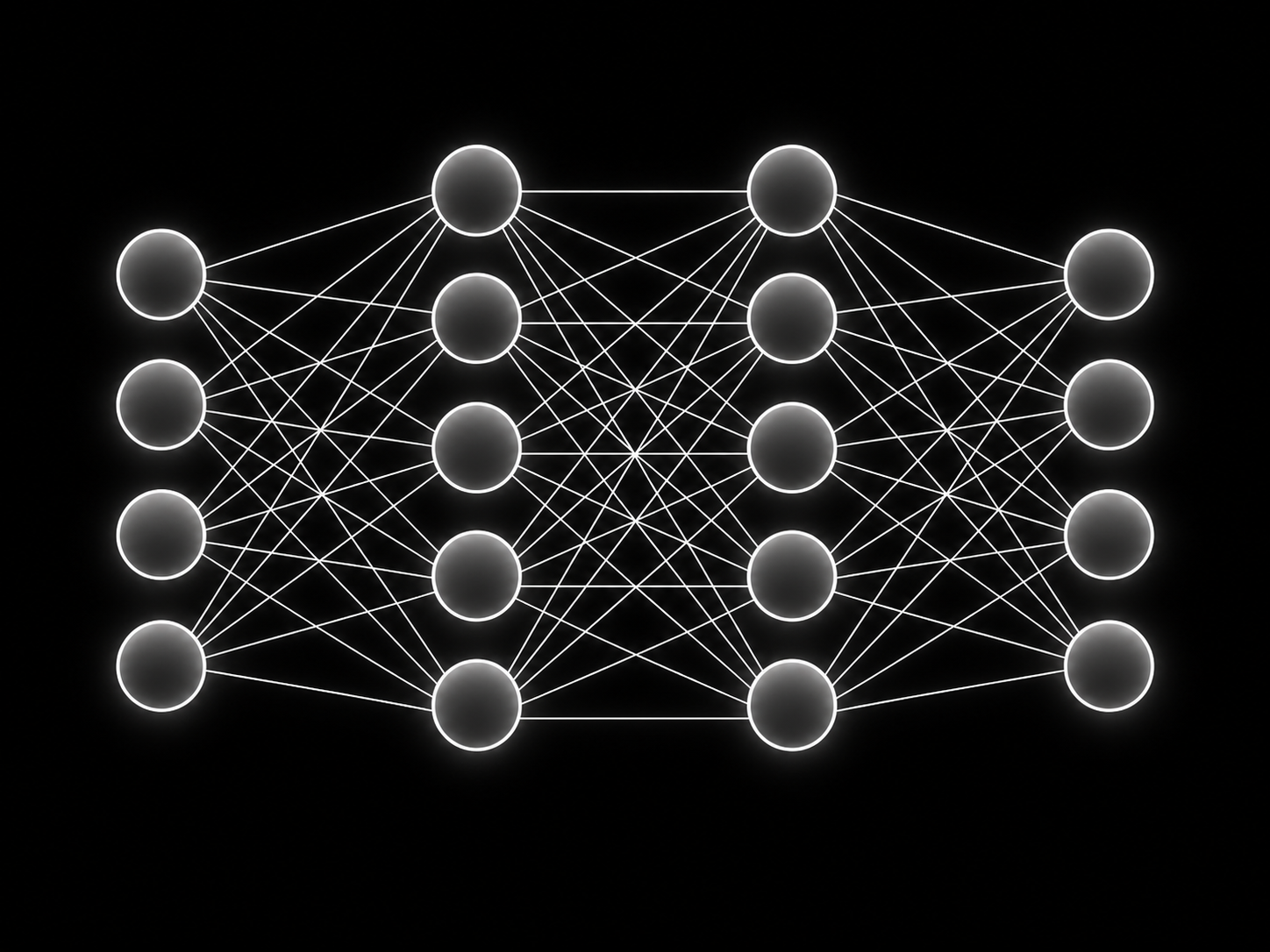
When most people think about AI today, they picture ChatGPT or Claude — tools that read your words and write back. That category of AI is called a Large Language Model, or LLM. But LLMs are just one type of AI. There is an entire world of other AI systems quietly running inside apps you already use every single day — and most people have never heard the names of any of them.
Stable Diffusion — AKA "Image Gen"
If you have ever typed a description into Midjourney, DALL-E, Adobe Firefly, or Canva's AI image tool and watched a picture materialize out of nothing, you have used a diffusion model. Stable Diffusion is the most well-known open-source version of this technology, and it works in a completely different way than the AI behind ChatGPT.
Here is the short version: a diffusion model is trained by taking real images and gradually adding random noise to them — basically scrambling them into visual static — and then learning how to reverse that process. Over millions of examples, the model gets very good at going from noise back to a coherent image. When you give it a text prompt, it uses that description to guide which direction to "de-noise" toward, and the result is an image that matches your words.
This is why image gen tools can make something that looks incredibly realistic — they are not "drawing" anything. They are running a sophisticated noise-removal process guided by your description. And it is also why the outputs sometimes look almost right but slightly wrong in specific ways (like hands with too many fingers): the model is approximating, not actually understanding what hands are.
Tools you probably already know that use this: Midjourney, DALL-E 3 (built into ChatGPT), Adobe Firefly (inside Photoshop and Canva), and the AI background tools in most photo apps on your phone.
Recommendation Systems — The AI That Knows What You Want
This is the most invisible and probably the most influential type of AI in your daily life. Every time Netflix suggests a show, Spotify builds you a playlist, TikTok chooses your next video, or YouTube auto-plays something — that is a recommendation system running in real time.
Recommendation systems are not language models. They do not read or write text. They are trained on behavioral data: what you watched, what you skipped, what you replayed, how long you paused. The AI then maps those behaviors against millions of other users who behaved similarly and surfaces content that people like you tended to engage with next.
TikTok's algorithm in particular has been widely studied because of how aggressively it optimizes. Within a few dozen interactions, it has enough signal to model your content preferences with unsettling accuracy. It does this without knowing anything personal about you — just the pattern of what your thumbs did.
This type of AI is responsible for a significant portion of the time most people spend on their phones. It does not feel like AI in the way ChatGPT does because it does not talk to you. But make no mistake — it is one of the most sophisticated AI deployments in the world.
Speech Recognition — The AI That Listens
Siri, Google Assistant, Alexa, and the auto-captions on your YouTube videos are all powered by speech recognition AI — a completely separate category from LLMs. The underlying job is to convert audio waveforms into text, and the model that made this technology genuinely impressive is OpenAI's Whisper, released in 2022.
Whisper was trained on 680,000 hours of multilingual audio from the internet, and what made it different was its robustness — it works well even with accents, background noise, and casual speech, in dozens of languages. Before Whisper, most speech recognition software fell apart if you were not speaking clearly in a quiet room in American English.
You encounter this AI constantly: any time you use voice-to-text to send a message, dictate notes, talk to your car's navigation system, ask your smart speaker a question, or watch auto-generated captions on a video — a speech recognition model is doing the work. The LLM might answer your question after, but the step of turning your voice into words first? That is a different AI entirely.
Computer Vision — The AI That Sees
Computer vision is the branch of AI that enables machines to interpret images and video. It is the technology behind Face ID unlocking your phone, Google Photos recognizing who is in your pictures, Instagram applying the right filter to your face, your car warning you when you drift out of your lane, and doctors using AI to scan medical images for early signs of disease.
These models are trained on enormous labeled datasets of images — pictures tagged with objects, faces, scenes, or defects — and they learn to identify patterns at a pixel level. A computer vision model trained on medical scans can often detect abnormalities earlier and more consistently than a human radiologist, not because it understands medicine, but because it has seen far more examples of what "normal" and "abnormal" look like and has perfect recall of every one of them.
The most visible everyday version of computer vision is probably the camera on your phone. Portrait mode, face unlock, document scanning, and the ability of apps like Google Lens to identify plants, translate text on signs, or search by image — all computer vision, all running locally on your device, all powered by a completely different class of AI than a chatbot.
Reinforcement Learning — The AI That Learns by Doing
Reinforcement learning (RL) is the type of AI that learns through trial and error rather than by studying examples. You give it a goal and a scoring system — reward it when it gets closer to the goal, penalize it when it does not — and it figures out on its own how to win. This is how DeepMind's AlphaGo learned to beat the world's best Go players, and it is also how self-driving car systems learn to navigate roads.
You interact with reinforcement learning more than you might realize. The AI behind most video game opponents uses versions of RL — the enemy that adapts to your playstyle in certain games, or the AI in sports simulations that gets harder as you improve. Tesla's autopilot system uses RL to refine driving decisions across billions of miles of real-world data. Robot arms in warehouses use RL to learn how to pick and sort objects they have never seen before.
RL is also what made ChatGPT dramatically more useful than the raw GPT-4 model underneath it. A technique called Reinforcement Learning from Human Feedback (RLHF) was used to fine-tune the model by having humans rate responses — rewarding helpful, honest answers and penalizing harmful or unhelpful ones. So even the LLM you use every day has reinforcement learning quietly baked into how it behaves.
Predictive AI — The AI That Forecasts
Not all AI is designed to generate something new. A large category of AI is purely about prediction: looking at existing data and making an educated guess about what happens next. This type of AI runs inside more services than most people imagine.
Google Maps uses predictive AI to estimate your arrival time. It is not just doing math on distance and speed limits — it is analyzing historical traffic patterns, current conditions, the time of day, the day of week, and real-time GPS data from millions of other users to forecast what the road will look like ten minutes from now when you get there.
Your bank uses predictive AI to flag unusual transactions before you even notice them. Fraud detection models are trained on millions of transaction records to identify patterns that look suspicious — and they make those calls in milliseconds, before the purchase even clears.
Weather apps, flight delay predictions, hospital readmission risk scores, streaming service recommendations (which also overlap with the previous section), and the dynamic pricing you see on rideshare apps — all of these are predictive AI doing jobs that would have required teams of statisticians a generation ago, now running automatically, invisibly, in the background of services you use every day.
The Point Is: AI Is Not One Thing.
LLMs like ChatGPT and Claude are genuinely impressive and genuinely useful — but they represent one tool in a much larger toolbox. When people say "AI is overhyped," they are often reacting to chatbots. When people say "AI is already everywhere," they are usually thinking about recommendation engines, speech recognition, computer vision, and predictive systems — all of which have been running silently for years.
Understanding that these are different technologies matters for one practical reason: the hype cycles around each type of AI are different, the use cases are different, and the risks are different. A language model hallucinating a fact is a different problem than a computer vision model misidentifying a person in a security system. Treating all AI as the same makes it harder to think clearly about any of it.
Direct Sources
Related Reading