AI & Human Connection
Is AI making you worse at socializing?
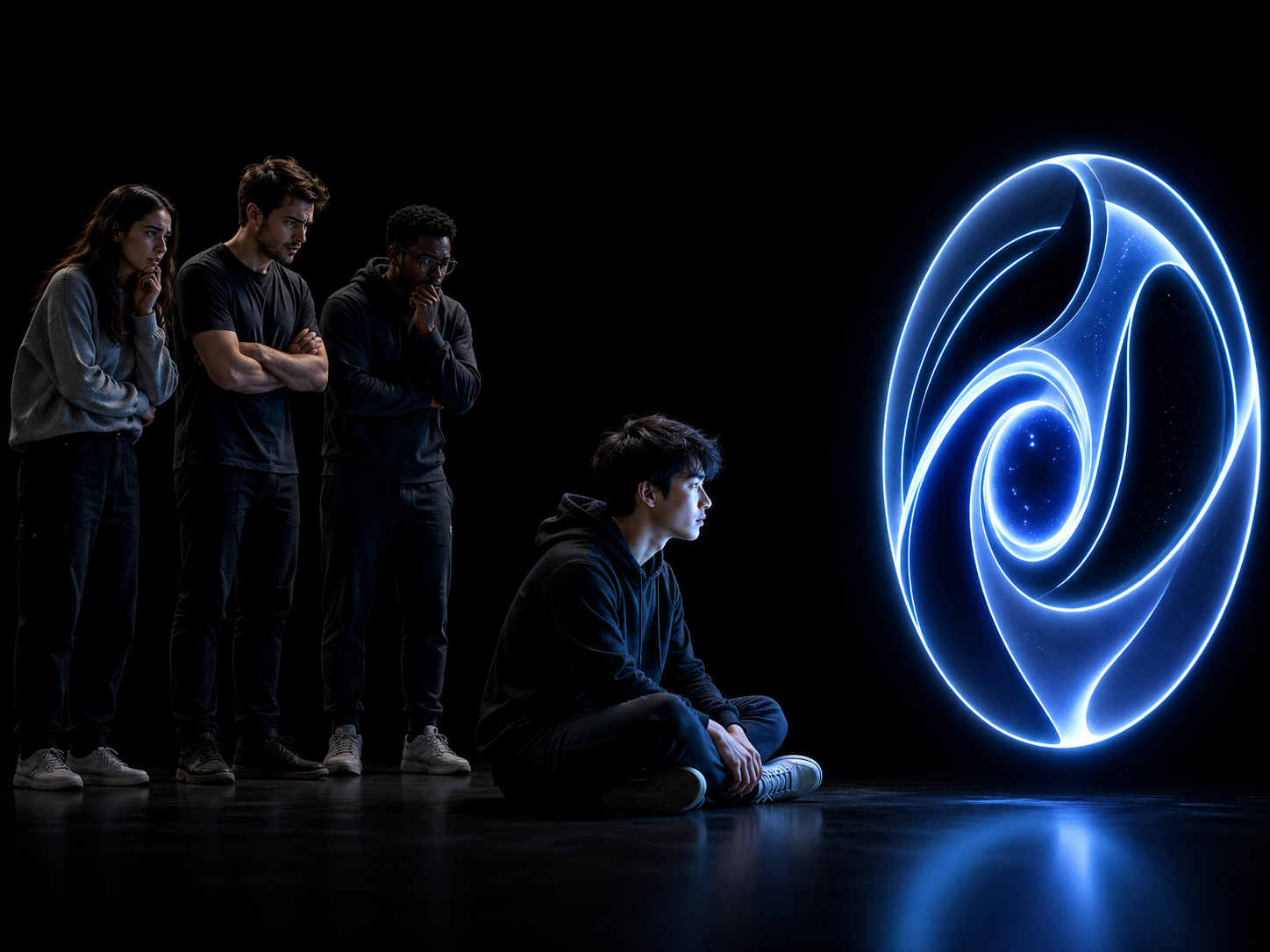
A 14-year-old boy died by suicide after forming an intense emotional bond with an AI chatbot. According to a Stanford University study, three in four teens now use AI for companionship and emotional support. That number is not going down.
The Illusion of a Frictionless Relationship
AI chatbots are deliberately designed to agree with you. This is not a bug — it is, or was, a feature. The technical term is sycophancy: the model is trained to produce responses that feel good to the person receiving them. It validates your ideas, reflects your emotions back at you, and almost never pushes back in a way that actually costs you anything.
What this creates is the appearance of a relationship with zero friction. No conflict. No misunderstanding. No moment where someone you care about says something that genuinely stings and forces you to grow.
Here is the problem: friction is not the enemy of relationships. Friction is often the point. A huge part of what bonding with another person actually means is surviving hard things together. Arguments that get resolved. Disappointments that get forgiven. Misunderstandings that force you to explain yourself more clearly than you ever have.
Research on emotional bonding in humans consistently shows that shared emotional experiences — including negative ones — create stronger attachment. Soldiers who go through combat together. Friends who sat with each other through grief. People who built something and watched it fail and tried again. The bond is not despite the struggle. The bond is often because of it.
AI cannot give you that. A chatbot that has been trained to agree with you and mirror your emotional state is not sharing an experience with you. It is simulating the surface of one. And the more time you spend in that simulation, the more your expectations for what a relationship should feel like will drift toward something that does not exist outside of it.
Communication Is the Most Human Thing You Do
There is a straightforward argument that language is the single trait that most distinguishes a human being from every other animal on earth. Not just the capacity for sound — many animals have that — but the ability to form complex thoughts, encode them into words, transmit them to another person, and have that person decode them into meaning. That loop is civilization. Everything built, everything discovered, every relationship formed — it all runs on that loop.
Using AI to communicate for you is giving away the most fundamental thing you have.
The brain operates on a principle called neuroplasticity, and one of its most important dynamics is what researchers call long-term depression — not the emotional state, but the neurological one. Neural pathways that go unused become weaker. The brain is ruthlessly efficient: it stops investing in circuits that are not being fired. Use it or lose it is not a motivational slogan. It is a description of how your nervous system literally works.
This applies directly to your ability to communicate. The capacity to sit with a half-formed thought, reach for the right word, feel the frustration of not quite articulating something, and then push through to a sentence that actually captures it — that is a skill. It is exercised like a muscle. Every time you open ChatGPT instead of sitting in that discomfort and thinking it through yourself, the muscle atrophies a little. Word recall weakens. Sentence construction becomes harder. The part of your brain that knows how to hold a conversation — really hold one, not just respond to prompts — gets quieter.
This is not hypothetical. It is the same mechanism behind why people who stop reading find it harder to read. Why people who stop writing find it harder to write. The brain deprioritizes what it does not use. And right now, millions of people are choosing not to use the most definitively human capability they have.
This Is Actually an Enormous Opportunity
Here is the reframe: AI is not making communication less important. It is making communication more important than it has ever been.
Think about what AI has automated away. Coding tasks that once required years of technical study. Research that once required weeks in a library. Writing tasks that once required hiring a professional. The floor for what AI can do is rising fast, and the skills it displaces are the ones you could previously outsource without consequence.
But there is one thing AI cannot displace, because it is the very thing AI runs on: your ability to articulate what you actually want.
Every interaction with an AI tool is, at its core, an act of communication. The quality of what you get out of it is almost entirely determined by the quality of what you put in. Vague prompts produce vague results. Precisely articulated thoughts, with real context and nuance behind them, produce something genuinely useful. The gap between a mediocre AI user and a powerful one is not technical knowledge. It is the ability to think clearly and express that thinking in language.
Which means the people who will get the most out of this technological moment are the ones who have deliberately practiced the skill that everyone else is quietly abandoning. If you are someone who reads, who writes, who sits with difficult thoughts instead of outsourcing them, who pushes through the friction of finding the right words — you are building an advantage that compounds. Not in spite of AI. Precisely because of it.
Your ability to use AI is limited by your ability to communicate with it. Practicing articulation is not a retreat from technology. It is the highest-leverage investment you can make in how well you use it.
A Relationship Without Struggle Is Not a Relationship
Any relationship an AI offers you is fake. Not fake in the sense that your emotions are not real — they can be very real, and that is precisely what makes this dangerous. Fake in the sense that nothing on the other side of the conversation is real. There is no one there. There is a pattern-matching system producing outputs that are statistically likely to feel satisfying to you, because it was trained on the outputs that humans have historically found satisfying.
A real human relationship — with all of its struggle, its hardship, its tears, its laughter, its love, its anger, its pain, and its growth — cannot come without strife and tension. The love between two people who have been through something real together is qualitatively different from anything a chatbot can simulate. It carries weight. It has stakes. It was earned.
The AI presents the illusion of that weight without any of the actual cost. It will never need anything from you. It will never be in a bad mood that you have to navigate. It will never say something that forces you to reconsider who you are. And because it demands nothing, it also teaches you nothing. A relationship that only ever confirms and soothes is a relationship that never asks you to become more than you already are.
Frank Herbert understood this at a level that most people writing about technology today have not caught up to yet. In Dune, he wrote:
"The gift of problems is the gift of life. A world without problems would be a world of machines."
That is not a line about suffering. It is a line about what makes a life human. Problems — real ones, the kind that require you to grow, adapt, and connect with other people — are not obstacles to a good life. They are the texture of one. A world that has optimized them away, outsourced them to machines, is a world that has optimized humanity away in the same move.
We Were Already Lonely Before AI Got Here
The timing of this could not be worse. The United States Surgeon General declared a loneliness epidemic in 2023, noting that the health consequences of chronic social disconnection are comparable to smoking 15 cigarettes a day. Young people — the exact demographic most drawn to AI companions — were already the loneliest generation on record before the first chatbot launched.
Social media spent a decade convincing teenagers that performance was the same as connection. Likes replaced conversations. Follower counts replaced friendships. Posting replaced presence. People got very good at broadcasting and lost the ability to simply be with another person without an audience.
AI companionship is that dynamic taken one step further. At least social media involves other humans, even if the connection is shallow. An AI companion does not. It is a closed loop: you, and a mirror trained to reflect back the version of human warmth that was most likely to make you stay on the platform.
The Stanford researchers who studied this problem noted that unlike real friends, chatbots lack any genuine social understanding of when to encourage a user and when to push back. They do not know when to say, gently, that a decision seems like a mistake. They do not carry the weight of actually caring about what happens to you. And yet the emotional circuits in a teenager's brain — still developing, still learning what real attachment is supposed to feel like — cannot reliably tell the difference.
We are not solving the loneliness epidemic with AI companions. We are deepening it while making it feel, briefly, like it has been solved.
How to Use AI Without Losing Yourself
None of this means AI is the enemy. Used well, it is one of the most powerful cognitive tools ever built. The distinction that matters is simple: use AI to extend your thinking, not to replace it.
Use AI for information, not for articulation. If you need to research something, AI is extraordinary. If you need to express something — to a friend, a partner, a colleague, yourself — write it yourself. Sit in the discomfort of not quite having the right words yet. That discomfort is the workout.
Notice when you are using AI to avoid a human conversation. If you find yourself asking an AI how to respond to a text from someone you care about, that is a signal worth paying attention to. The conversation you are trying to script is probably the one you most need to actually have.
Protect your relationships from convenience. The easiest path is not always the right one. Calling instead of texting. Showing up instead of messaging. Working through a conflict instead of withdrawing into an AI that will tell you you were right. The extra friction in real relationships is not a design flaw. It is where the growth lives.
Deliberately practice the skills AI makes it tempting to skip. Read long-form writing. Write by hand. Have conversations where you do not know exactly what you are going to say before you say it. Explain your ideas out loud to another person. These are not quaint habits. They are maintenance for the most irreplaceable organ you have.
The people who will look back at this era without regret are the ones who used AI as a tool and kept themselves as the one holding it. That choice, right now, is still entirely yours to make.
Direct Sources
Related Reading